

- Introduction – Why Exercise Is Key for Chesapeake Bay Retrievers
- 1. Understanding the Energy Levels of Chesapeake Bay Retrievers
- 2. Swimming – The Ultimate Workout for This Water-Loving Breed
- 3. Fetch and Retrieval Games to Burn Energy Fast
- 4. Hiking and Long-Distance Walks for Endurance
- 5. Canine Sports and Agility Training
- 6. Mental Stimulation to Complement Physical Exercise
- Conclusion
- FAQs About Exercising Chesapeake Bay Retrievers
Introduction – Why Exercise Is Key for Chesapeake Bay Retrievers
Chesapeake Bay Retrievers, also known as Chessies, are high-energy, intelligent, and hard-working dogs that were originally used to retrieve waterfowl in difficult conditions. They have a muscular physique and will keep traveling even when they have to walk a lot daily as well.
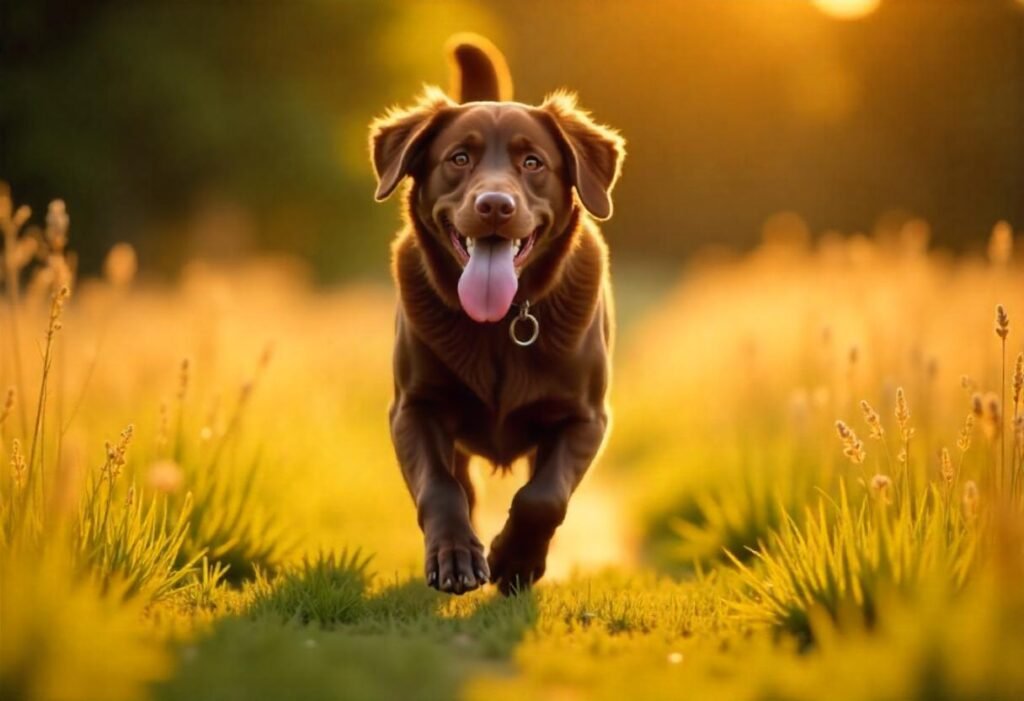
They develop boredom easily, as when these dogs are not taken out and exercised properly, they develop vices like chewing and uncontrollable barking, or agitation. Their normal exercise combined with physical exercise is healthy, uses up additional energy, and strengthens the bond between you and your dog.
This guide will discuss the actual required amount of exercise Chesapeake Bay Retrievers must receive and introduce 5 exercises that have been shown to keep them fit, happy, and mentally stimulated throughout the year..
1. Understanding the Energy Levels of Chesapeake Bay Retrievers
The Chesapeake Bay retriever is also a working dog, and it is as strong as the breeding was made to be active. They are active and cannot afford to miss an active due diligence to maintain a healthy living and remain contented.
Typical Daily Exercise Needs in Hours
The Retriever adult Chesapeake Bay would need no less than 1.5 to 2 hours of exercise daily and 2 or more exercises. Even the puppies, as well as older dogs, can be compelled to go through less violent and even shorter frequent exercise.
How Age, Health, and Lifestyle Affect Activity Requirements
- Puppies: brief, game-driven meetings not to stress joints.
- Adults: Hard training such as swimming, hiking, or agility training.
- Older people: Minimal walks and light games to maintain good joint health.
A sedentary household may need to include one more activity to make sure that the needs of a Chessie are fulfilled.
Signs Your Chesapeake Bay Retriever Isn’t Getting Enough Exercise
Is your Chessie destroying your furniture, yelling and bristling and pacing about, or seeming to be put about at night? His or her problem requires to be exercised more exercise, both physically and mentally.
2. Swimming – The Ultimate Workout for This Water-Loving Breed
The Chesapeake Bay Retrievers are the best when it comes to swimming; they offer an exercise. They are waterproof, have strong feathers, and webbed, and are consequently natural swimmers.
Why Chesapeake Bay Retrievers Excel at Swimming
They were cold water duck-retrieving dogs and are more powerful and endowed with stamina, besides being more trustful of water. The muscles are exercised throughout the swimming exercise, and the zero-pressure proximity is pressurized.
Safe Swimming Spots and Water Safety Advice
- During the cold weather, spend too little time in the water/ swimming lest you become hypothermic.
- Supervise your dog when swimming.
- When using 3 percent salt or chlorinated water, wash off their coat to prevent investigating skin.
How Often to Incorporate Swimming into Their Routine
During hot seasons, you are advised to aim for taking 2-3 swims in a week. The indoor dog pools allow them to perform activities even in colder seasons without the fear of contracting cold water.
Check Out: How to Groom Field Spaniels: 6 Easy Ways to Avoid Mats, Shedding & Skin Issues.
3. Fetch and Retrieval Games to Burn Energy Fast
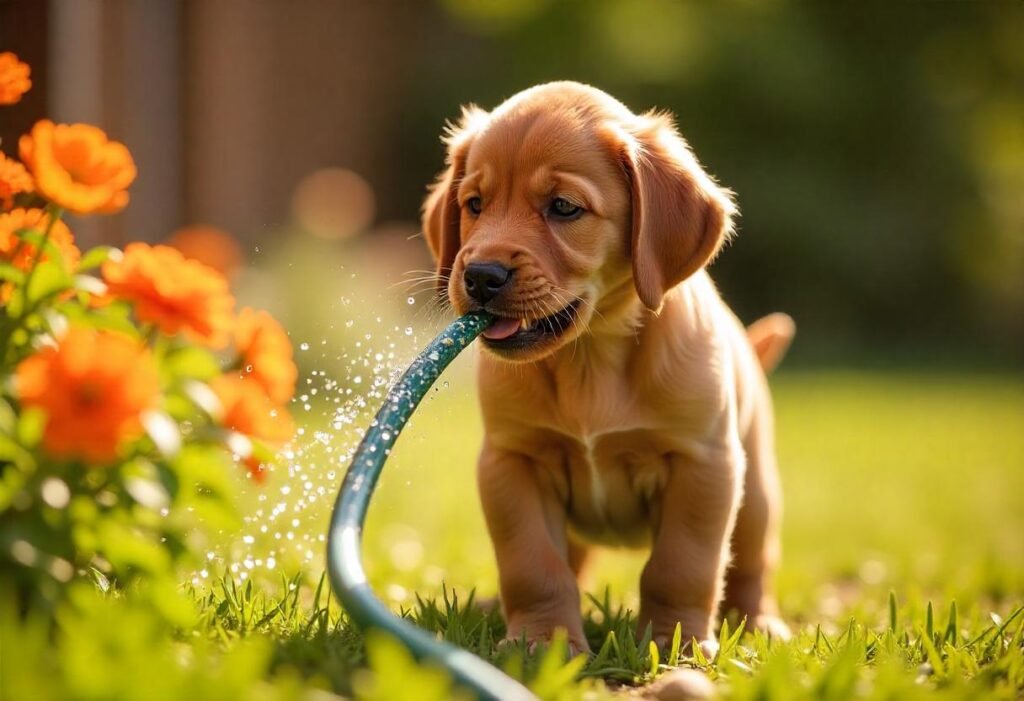
Chesapeake Bay Retrievers are a highly driven retriever breed, and therefore, fetch is one of the most efficient and pleasant methods to exercise them. Such games are physical, together with brain activities, bringing about the exhaustion of even the most active Chessie.
Using Their Natural Retrieving Instincts
Chessies are bred to hunt both land and water game with great success in the retrieve. Sprinting or swimming increases their prey drive and maintains them in top physical form, in periods of short duration and at high intensity.
Best Toys for Fetch on Land and Water
- On Land: Rubber balls, frisbees, or rugged tug toys.
- Floating bumpers, fetch balls that were safe in the water, and retrieval dummies were used in the water.
Pick out bright colors so that toys can be seen in the grass or the water.
Training Tips to Make Fetch More Challenging and Stimulating
- Differentiate distances and angles of throwing.
- Toys can be hidden in tall grass so that they are sniffed out.
- Train a combination of fetch and obedience training, such as sit or stay, followed by release.
4. Hiking and Long-Distance Walks for Endurance
As the stamina of a Chesapeake Bay Retriever will be tested because of hiking, it will also act as a stimulation to its mind because of the new views and smells.
How to Safely Build Stamina for Long Hikes
One can start with a hike in the forest and can create distance and climbing. Take some water with oneself where possible and take rests so as not to dehydrate the body, particularly on a hot day.
Best Terrains and Seasons for Hiking with Your Chessie
Chessies are home to many landscapes- a woody footpath, green-gifted hills, or by the lake. The best ones are fall and spring months since the weather is a bit colder, and there is a better chance to avoid such guests as ticks or heatstroke.
Essential Gear for Outdoor Adventures
- It will be a heavy-duty harness that will not be difficult to wear.
- Collapsing water in a Bowl of freshwater
- First-aid kit for a dog
- Reflective clothing or running in the wee hours or evenings, illumination in the early mornings or evenings, and tours
5. Canine Sports and Agility Training
Chesapeake Bay retrievers have good physical dexterity since they are working dogs and canine sport qualified candidates. These activities not only will make them be in the best shape but also satisfy their desire for mental activity.
Activities Like Dock Diving, Obedience Trials, and Fieldwork
- Dock Diving: It is an awesome sport to do with water-loving Chessies, which builds muscles and confidence.
- Obedience Trials: These make them keener, and they learn commands more by training.
- Fieldwork: Immersion in the smell as a way to reproduce what they do in their original activity, which is hunting the product, and including recovery.
Benefits for Both Mind and Body
Sports involving the participation of the dog improve the cardiovascular system, build muscles, and strengthen the joints. They equally teach the skill of problem solving, and they drive away boredom.
How to Find Local Clubs or Competitions
Ask about dog sport get-togethers and events within your area of your local kennel clubs, listings on the AKC ( American Kennel Club), or online groups.
6. Mental Stimulation to Complement Physical Exercise

Not only worked out, you see, Chessie–not dog-tired, but they are to be exercised in the head as well as the legs. Exercises and play should be used together with mental stimulation.
Puzzle Toys, Scent Games, and Training Challenges
- Puzzle Toys: get them to figure out the way to acquire treats.
- Scent Games: hide a toy or a goodie in the house or the yard, and then they sniff.
- Training Problems: Condition new tricks or orders, or work.
Why Mental Enrichment Is Just as Important as Physical Activity
They are given an increased mental capability in terms of solving problems, and because stress is removed, they can end up being in a position where they finally avoid cases of destruction, whereby they are bored.
Daily Brain Games to Keep Them Sharp
- To replace the freshness of books and toys, swap them.
- Ensure that feeding time takes place using slow feeder products hence to make the feeding time interesting.
- Have games, which they pursue their favourites.
Conclusion
Chesapeake Bay retriever is an active dog because it is an aggressive, intelligent, and outgoing dog. It could be swimming and fetch, picking, hiking, canine athletics, or brain games; the options are inexhaustible, to keep them on their feet and keep them fit.
With this combination of 5 activities that you can include in the weekly routine of Chessie, you will be sure that you have helped him or her to release the extra energy, sharpen their minds, and build a better relationship with them. But mind to be moderate and have rest. They have to go everywhere: run, swim, play, they should be able to rest, and relax.
Being the owner of a fit Chesapeake Bay Retriever does not just mean their pet will be healthier and happier, but with better and improved behavior as well.
For more info: Click Here.
FAQs About Exercising Chesapeake Bay Retrievers
1. Daily Exercise Requirement of Chesapeake Bay Retriever?
Most adult Chesapeake Bay Retriever only needs 1.52 hours of exercise during the morning and evening. The senior and puppies may not require so much, but they also should be mentally challenged.
2. Is the Chesapeake Bay Retriever able to live since exercised enough in apartments?
Yup- and as long as the home where they are staying has enough living room, a Chesapeake Bay Retriever can certainly live in apartment-style living environments as long as the dog gets enough exercise and intellectual stimulation on a daily basis.
3. At what age is it possible to teach an agility-level Chesapeake Bay Retriever?
It may start at an extremely tender age between 8 and 12 months, and basic agile training needs to be initiated with low impact to prevent joint injuries. The bigger barriers are harder; i.e., full height barriers are added after 12-18 months (at that time they have fully grown plates).