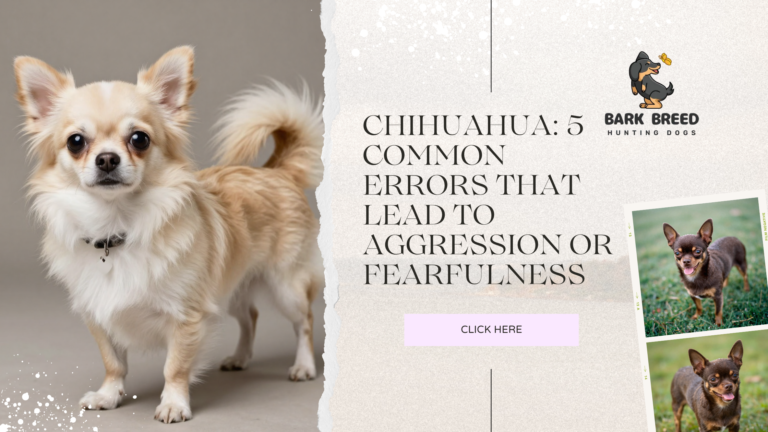
- Introduction
- Error #1: Inconsistent Training—The Fast Track to a Reactive Chihuahua
- Error #2: Overprotective Owners Can Accidentally Create a Fearful Chihuahua
- Error #3: Lack of Socialization—A Major Trigger for Aggression
- Error #4: Ignoring Exercise Needs—A Hyper Chihuahua Is a Frustrated Chihuahua
- Error #5: Punishment-Based Discipline Makes a Nervous Chihuahua Worse
- Bonus Section: Signs Your Chihuahua Needs Professional Help
- Conclusion
- FAQs
Introduction
The Chihuahua might be regarded as one of the smallest in the world; however, the personality of the dog is anything but small. Chihuahuas are best known to be bold, loyal as well and expressive, and can find companions in large numbers when their actions are molded right at the beginning. Sadly enough, the majority of owners inadvertently promote the development of aggression, reactiveness, or fearfulness, merely because they do not understand the special needs of this pint-sized dog.
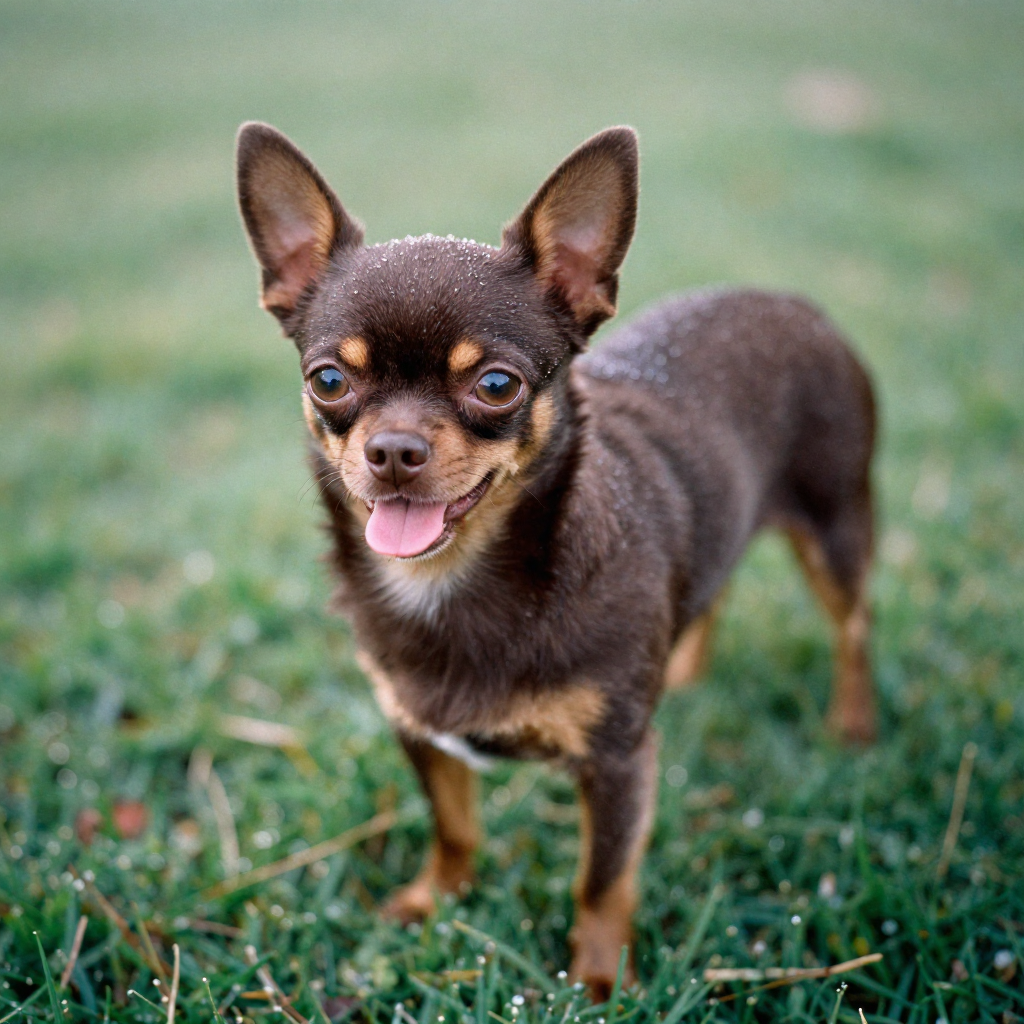
We will divide the five most frequent mistakes that bring about behavior issues in Chihuahuas in this guide and demonstrate how to prevent them or fix them. Are you tired of your Chihuahua lying there on the floor, yelling at every stranger? snarling when he is picked up? Or trembling when you introduce him to a new friend? The first step to having a well-adjusted, well-behaved dog is to understand why he is making all these errors.
We shall delve in and find out what could be causing your Chihuahua to have a tough exterior or a timid exterior.
Error #1: Inconsistent Training—The Fast Track to a Reactive Chihuahua
Why skipping early training leads to barking, snapping, or hiding
Most owners believe that due to the size of the Chihuahua, it does not require the same amount of training as other bigger breeds. And this is just where trouble comes in. In the absence of early organization, a Chihuahua will create its own set of rules–a set of rules that is usually based on the use of barking, snapping, or retreating to exercise control over situations that appear to get out of control.
In the long run, such a feeling of being unguided may develop into reactive behaviors, in this case with strangers or unfamiliar environments.
How inconsistency confuses your Chihuahua
The training of chihuahuas is through repetition. The Chihuahua is furious and anxious when the owner allows the dog to jump or beg or, once more, to bark, and another time is scolded when the same thing happens again.
This misdirection leaves ambiguous messages, and your dog will be in confusion about what is expected. These bouts of indecisiveness will often lead to fearfulness or aggressive attack with offensive habits, especially with a naturally vigilant breed like the Chihuahua.
Simple, beginner-friendly training habits to fix the issue
- Make it a habit: Exercise daily, although it need not be for a long time (5 minutes is enough).
- Keep your commands to the point: one-word commands sit, stay, or come.
- Reward desirable decisions instantly: Punish unwanted behavior instantly.
- Maintain the positive energy: Chihuahuas perform well when there is positive energy, which lasts forever.
- Whining or barking must be avoided: This will accidentally promote bad behavior.
Regular training instills confidence in your Chihuahua and also minimizes stressful behavior that is reactive.
Error #2: Overprotective Owners Can Accidentally Create a Fearful Chihuahua

How excessive coddling reinforces fear
Chihuahuas are such small creatures–it is natural to want to pick them up the moment one sees anything wrong. However, when you save your dog numerous times out of circumstances that are not really hazardous, you teach them that this world is dangerous and they should fear.
Such protection subconsciously supports the development of fearful behavior, as your Chihuahua will rely on you to develop a sense of safety rather than learn how to develop confidence independently.
Difference between comfort and enabling
It is all right to console your Chihuahua when it is startled. Facilitating is, though, when you reward your dog by petting, comforting, or taking it out of regular activities such as meeting new people or hearing new sounds.
Comfort says:
“I’m here with you, you’re safe.”
Enabling says:
This is not right, you have to be scared.
That slight variation is significant in the development of a Chihuahua in its long-term behavior.
Balanced social exposure tips for a well-adjusted Chihuahua
- Begin slowly: Find new people, places, pets, and so on.
- Engaging positive reinforcement: Punish behavior in new environments.
- Allow them to walk: Do not take your Chihuahua everywhere; it prevents the opportunities of building confidence.
- Remain calm in times of fear: Panic not, your coolness sends a message of security.
- Offer provoked social interactions: Puppy classes, short interactions with a friend whom one can trust, or domestic dogs also help to normalise social interactions.
Equal exposure will help your Chihuahua to be less scared and will be less scared as time passes by.
Check Out: Siberian Husky: 7 Mistakes That Lead to Escaping and Running Away.
Error #3: Lack of Socialization—A Major Trigger for Aggression
Why Chihuahuas need structured, positive socialization
Even when they are young, chihuahuas can develop big personalities with an aggressive one, though they are not big unless they are exposed to other people, animals, and places at a tender age. Socialization could make your Chihuahua realize that there is no need to be afraid of anything in new experiences, and there will be less fear and reactive actions. Without it, even everyday communication can become stressful and lead to the use of protective snapping or yelling.
Key socialization stages owners often miss
- Puppy stage (314 weeks): Important in the acceptance of new sounds, surfaces and friendly people.
- Adolescent stage (46 months): Strengthens the positive experiences and avoids developing fear.
- Adult stage: The continued exposure to new situations will not allow regression and will retain confidence.
The lack of these steps may result in a Chihuahua that is shy, sensitive, or too attached to their owner.
Safe ways to introduce your Chihuahua to people, pets, and environments
- Begin with relaxed, friendly individuals in a relaxed environment.
- Give your Chihuahua time to make contact with new dogs.
- Introduce them slowly to crowded streets, parks, or noise, by treats and praise.
- Do not make them interact with each other forcefully: they like to learn when they feel free and in charge.
- Have short, frequent socialization sessions as opposed to lengthy and disheartening outings.
Constant positive socialization creates a confident Chihuahua, who will not be afraid to experience anything new and will not be aggressive.
Error #4: Ignoring Exercise Needs—A Hyper Chihuahua Is a Frustrated Chihuahua
How pent-up energy can turn into aggression
Chihuahuas are not very large, but they have curious and active bodies and minds. This may cause frustration since the inactivity and non-mind-absorbing objects may result in snapping, shouting, among other types of violence. A Chihuahua is no different than any other dog since it requires an outlet of energy, not to get agitated and violent.
Realistic exercise recommendations for small breeds
- Exercises: Because of age and strength, all walks should be 15 to 30 minutes each day.
- Short play sessions: Multiple 5–10 minute sessions indoors or in a secure yard.
- Interactive games: Fetch, hide-and-seek, or gentle tug toys.
Indoor mental enrichment ideas
- Puzzle toys: This stimulates their brain, and this also removes boredom.
- Training exercises: Obedience exercises/ trick training.
- Scent games: Have them hide treats in the house to find them.
- Toys rotation: This maintains attention and avoids tedious, destructive activity.
Mental and physical stimulation will help you ensure that a hyperactive Chihuahua does not become aggressive or anxious due to the excess energy.
Error #5: Punishment-Based Discipline Makes a Nervous Chihuahua Worse
Why harsh corrections create fear-based aggression
Chihuahuas are shy, and they are vigilant. Punishment, yelling, and other physical corrections may be used to provoke fear rather than understanding. Any punished nervous Chihuahua will respond to being punished by snapping, cowering, or defending himself, and encouraging you to do what you are trying to get him to stop doing.
Better reward-based training methods
- Positive reinforcement: Rewards such as praise, rewards, and toys to calm desired behavior.
- Clicker training: This is the way of teaching in your way, to enable your Chihuahua to learn more quickly, you correct him.
- Regularity and perseverance: It is better to have short training classes on a regular basis than long, stressful sessions.
How to correct behavior without escalating anxiety
- Instead of punishing undesirable behavior, redirect that behavior (e.g., instead of scolding a bark, provide a toy).
- Calmly take your Chihuahua out of high stress situations.
- Any little progress made in the direction of the intended behavior should be rewarded in order to generate confidence over time.
- Keep in mind not to use sudden bursts and movements; a steady, soft voice tone should be used.
Through rewards, you build trust with your Chihuahua and minimize the responses of people based on fear.
Bonus Section: Signs Your Chihuahua Needs Professional Help
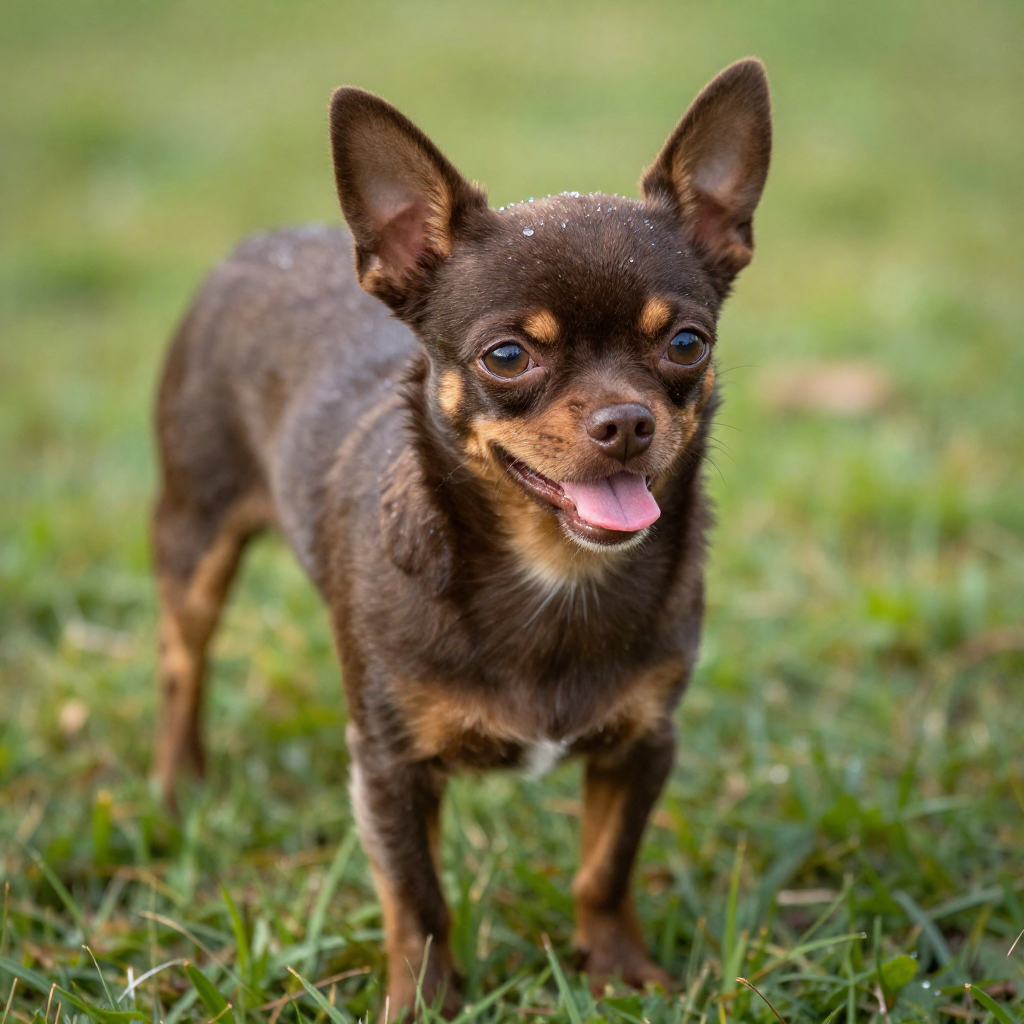
When aggression or fearfulness goes beyond normal
With recurrent training, certain Chihuahuas might have a stubborn or growing aggravation or might be excessively frightened of familiar individuals or areas or might engage in harmful actions, such as overlicking or overbiting. These are indicators that a professional intervention is possible.
Indicators that training alone may not be enough
- Violence towards relatives or pets that are well known.
- Failure to cope with regular stimuli such as doors, cars, or strangers.
- The anxious state that cannot be controlled during walks or when socializing.
- Regression despite congruent, favorable training.
What to expect from a canine behaviorist or trainer
- Behavior evaluation: Determining the antecedents of aggression or fear, and the cause.
- Individual training program: Desensitization, counter conditioning, and confidence-building.
- Continuous assistance: Advice to owners on how to execute the strategies in a safe and efficient way.
- Potential liaison with vets: In case anxiety or aggression happens to be connected with medical problems.
The difference that professional assistance can produce is deciding a scared or even a reactive Chihuahua to be a confident and well-adjusted companion.
Conclusion
The Chihuahuas are tiny, and yet their personality is colossal. Poor socialization, lack of exercise or punishment-based disciplining, inconsistent training, and overprotection are usually the causes of aggression or fearfulness in this breed. By gaining awareness of these errors at their first reveal and with the implementation of beneficial and positive, and consistent actions, you will be able to direct your Chihuahua to confidence and easy-going mannerisms.
Keep in mind that one has to be tolerant and accommodating. The Chihuahua, the most stubborn of all the varieties of dog, may be kept under pleasant conditions, and it is a pleasant animal when properly trained, socialized, and mentally challenged. Taught in the right way, your little friend may be a religious, courageous, and well-adjusted member of your household.
For more info: Click Here.
FAQs
1. How can I stop my Chihuahua to be afraid of strangers?
The aids may include slow socialization, exposure to a restricted number of new people, and training on the basis of rewards. Do not spoil your dog, and encourage peaceful coexistence with your dog to develop confidence in the long run.
2. What on earth is wrong with my Chihuahua? It is so small and mean.
Among the causes of aggressiveness among chihuahuas are fear, improper socialization, improper training, as well as overprotection. The fact that it is small does not exclude stress and defensive attitude: it is necessary to achieve something with the cause of these problems with the help of positive reinforcement and systematic exposure to the social environment.
3. How do I deserve the situation when I will need to consult professional services about the aggressiveness or anxiety of my Chihuahua?
The next step to take is to seek the services of a professional canine trainer when your Chihuahua persists in its aggression towards your family members, other pets, and strangers, and you can no longer carry out your daily business and suffer out of fear. Clinical advice is attained to attain safe and efficient behavior change.